
Choosing drug rehabilitation is a major step towards recovery. For many people, the idea of entering rehab can feel uncertain because they may not know what will actually happen once they arrive. Drug rehabilitation is not simply about stopping drug use. A good rehabilitation programme looks at the person as a whole, including their physical health, mental wellbeing, relationships, daily habits and the reasons that may have contributed to their substance use.
At Six Seasons Recovery, our approach is centred around personalised care, privacy and one-on-one support. Located in the Margaret River region of Western Australia, the retreat provides a private environment where clients can step away from the pressures of everyday life and focus on their recovery. The programme can support people experiencing difficulties with illicit drugs, alcohol and prescription medication dependence, with treatment tailored around their individual circumstances.
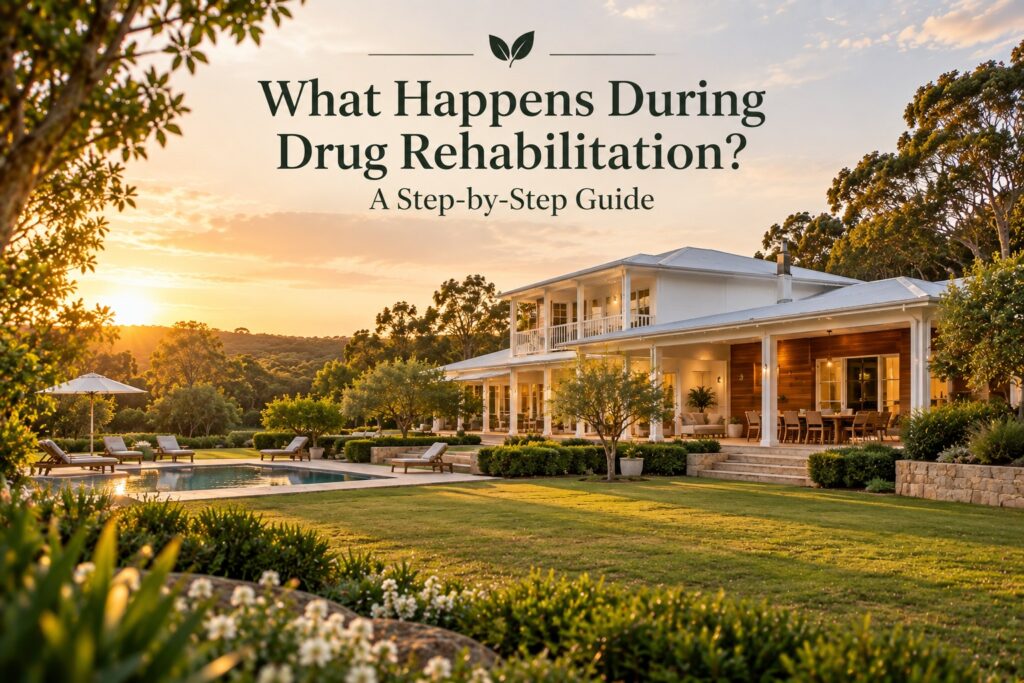
Starting the Recovery Process
The recovery process usually begins before you arrive at the rehabilitation centre. The first step is a confidential conversation with the admissions team. This gives you an opportunity to explain what you have been experiencing, ask questions about treatment and understand whether the programme is suitable for your needs.
At Six Seasons Recovery, the initial conversation is also about making sure the programme is appropriate for you. Addiction affects everyone differently, so there is no single treatment plan that works for every person. Your history, current circumstances, physical health, mental health and recovery goals all need to be considered before treatment begins.
Once you decide to move forward, the team helps you prepare for your stay. This can include discussing travel arrangements, what to bring with you and what you can expect when you arrive. Private transfers can also be arranged from Perth or Busselton, helping make the transition into the retreat as comfortable and discreet as possible.
Your Initial Assessment
When you arrive, the focus turns towards understanding your individual needs. A medical and health assessment helps the team understand your current physical and psychological wellbeing, your history with substances and any other issues that may need attention during your stay.
This assessment is an important part of private rehabilitation because it allows treatment to be personalised rather than following a standard programme. Someone recovering from long-term alcohol dependence may have very different needs from someone experiencing problems with prescription medication or illicit drugs.
Where appropriate, medical professionals can also assess whether withdrawal management or additional medical support is required. Withdrawal can sometimes carry serious health risks, particularly with alcohol or certain medications, so stopping suddenly without appropriate medical advice is not recommended for people who may be physically dependent.
Creating a Personalised Treatment Plan
Following the assessment, a treatment plan is developed around the individual. Rather than expecting every client to follow exactly the same routine, the aim is to understand what will be most useful for that person’s recovery.
At Six Seasons Recovery, treatment can include psychological support, counselling, medical care, nutritional guidance, physical wellbeing and practical strategies for maintaining recovery after leaving the retreat. Evidence-based approaches such as Cognitive Behavioural Therapy (CBT), Motivational Interviewing, Acceptance and Commitment Therapy (ACT), mindfulness and psychoeducation may form part of the programme depending on the individual’s needs.
The core approach is highly personalised and centred around one-on-one support. Group therapy is not required, which can be particularly important for people who value privacy or who may not feel comfortable discussing personal experiences in a group environment.
Understanding What Is Behind the Addiction
One of the most important parts of drug rehabilitation is understanding that substance use is often connected to other areas of a person’s life. Addiction can develop alongside trauma, stress, anxiety, depression, relationship difficulties, grief, work pressures or other personal challenges.
Simply removing drugs from someone’s life without addressing these underlying issues can make long-term recovery more difficult. Rehabilitation provides an opportunity to slow things down and look honestly at what has been happening.
Through individual therapy and counselling, clients can begin to recognise patterns, understand triggers and develop healthier ways of responding to difficult situations. The aim is not to judge the past, but to understand it and use that understanding to create a different path forward.
Supporting the Body During Recovery
Recovery involves more than psychological treatment. Long-term substance use can affect sleep, nutrition, energy levels, physical health and general wellbeing, which is why these areas can also form part of a comprehensive rehabilitation programme.
At Six Seasons Recovery, the approach includes medical, psychological, nutritional and physical support. Depending on the individual programme, clients may have access to services such as nutritional support, fitness activities, meditation, mindfulness and other wellbeing therapies.
For people requiring withdrawal management, support is individualised and medical professionals can monitor their condition and provide appropriate care. The priority is to make the process as safe and manageable as possible while helping the person begin rebuilding their physical health.
Creating New Habits and Routines
Rehabilitation also provides time away from the environments, routines and situations that may have contributed to substance use. This can give clients space to develop healthier daily habits and practise strategies that can be used once they return home.
A major part of recovery is learning how to deal with triggers and difficult situations without returning to drugs or alcohol. Therapy can help clients recognise early warning signs, manage emotions and develop practical coping strategies.
The peaceful surroundings of the Margaret River region can also provide an opportunity to step away from the pressures of normal life. At Six Seasons Recovery, the private setting is designed to give clients space to concentrate on themselves and their recovery without the distractions that can make change more difficult.
Preparing for Life After Rehabilitation
Recovery does not end when a residential rehabilitation programme finishes. In many ways, leaving rehab is the beginning of another important stage.
Before completing treatment, clients can work on a continuing care plan that considers what support they may need when they return home. This can include strategies for maintaining healthy routines, managing triggers, continuing therapy and strengthening relationships.
Six Seasons Recovery provides 12 months of intensive aftercare, giving clients ongoing support beyond their residential stay. This is an important part of the recovery approach because returning to everyday life can bring new challenges, and having continuing support can help people stay focused on the changes they have made.
How Long Does Drug Rehabilitation Take?
There is no single length of time that is right for everyone. The appropriate duration depends on the person’s substance use, physical and mental health, treatment needs and progress during rehabilitation.
Six Seasons Recovery offers residential programmes starting from 21 days and extending to six weeks, with treatment plans tailored to each individual. Some people may need more time to work through underlying issues, establish healthier routines and prepare for the transition home.
Australian Government data also shows that rehabilitation can involve different lengths of treatment. In 2024–25, the median duration of rehabilitation treatment for people receiving alcohol and other drug treatment in Australia was 40 days. This does not mean that every person needs 40 days; treatment length varies considerably depending on individual circumstances.
Recovery Is a Process, Not a Single Event
Drug rehabilitation is not about simply completing a programme and expecting everything to change overnight. Recovery is a gradual process that involves understanding yourself, changing established patterns and learning how to deal with life without relying on substances.
For some people, entering a private rehabilitation centre provides the space they need to make those changes away from their usual environment. With personalised therapy, medical support, healthy routines and continuing aftercare, the focus can move beyond stopping substance use towards building a healthier and more sustainable life.
At Six Seasons Recovery, the approach is designed around privacy, individual care and long-term recovery. With a private retreat in Western Australia, one-on-one treatment and ongoing aftercare, clients can take the time and space needed to focus on their wellbeing and the next stage of their lives.
If you or someone close to you is considering drug rehabilitation in Perth or Western Australia, speaking confidentially with a qualified rehabilitation provider can be a useful first step. You do not need to have everything figured out before asking for help.